




Vous êtes ici : UVSQ L'UVSQÉvénements à venir
- Publié le 19 mai 2026
- Version PDF
ROMST Partners Gather in France to Advance the Future Erasmus Mundus Master’s Programme
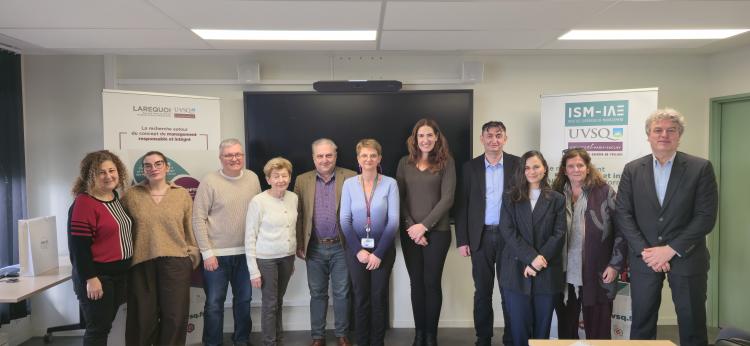
On 19 and 20 February, the ROMST consortium met in France for a two-day seminar dedicated to the development of the future international Master’s programme in Responsible Organizations’ Management for Sustainable Transitions.
du 19 février 2026 au 20 février 2026
19 and 20 February, 2026
Guyancourt, France
The seminar brought together all project partners and offered an important opportunity to discuss the next steps in the design of the future programme. A key part of the discussions focused on the possible accreditation models for the Master’s degree, taking into account the institutional and national requirements of each partner university. Partners also exchanged views on their level of engagement in the future project and on the different ways in which each institution could contribute to the implementation of the programme.
During the seminar, the consortium also worked on a benchmark of existing training programmes at the European level, within Erasmus Mundus programmes, and within each partner university. This comparative work helped identify common strengths, complementary expertise, and possible gaps to be addressed in the future ROMST curriculum.
A major part of the meeting was devoted to a collective brainstorming session on the content of the future Master’s programme. Partners discussed the key competencies to be developed, the structure of the curriculum, and the pedagogical approaches that could support students in becoming future managers, project leaders, and entrepreneurs able to address ecological, social, and digital transitions in a responsible and ethical way. This reflection is consistent with the planned curriculum, which includes responsible management, ethics, sustainable finance, European policies, ecological, social and technological transitions, responsible innovation, intercultural management, dialogic change management, entrepreneurship, consulting, research and internships.
This seminar represents an important milestone in the co-construction of the ROMST project. By bringing together diverse academic expertise and institutional perspectives, the consortium strengthened its shared vision for an innovative, interdisciplinary and internationally integrated Master’s programme responding to the major challenges of sustainable transitions.
During the seminar, the consortium also worked on a benchmark of existing training programmes at the European level, within Erasmus Mundus programmes, and within each partner university. This comparative work helped identify common strengths, complementary expertise, and possible gaps to be addressed in the future ROMST curriculum.
A major part of the meeting was devoted to a collective brainstorming session on the content of the future Master’s programme. Partners discussed the key competencies to be developed, the structure of the curriculum, and the pedagogical approaches that could support students in becoming future managers, project leaders, and entrepreneurs able to address ecological, social, and digital transitions in a responsible and ethical way. This reflection is consistent with the planned curriculum, which includes responsible management, ethics, sustainable finance, European policies, ecological, social and technological transitions, responsible innovation, intercultural management, dialogic change management, entrepreneurship, consulting, research and internships.
This seminar represents an important milestone in the co-construction of the ROMST project. By bringing together diverse academic expertise and institutional perspectives, the consortium strengthened its shared vision for an innovative, interdisciplinary and internationally integrated Master’s programme responding to the major challenges of sustainable transitions.
 Etudiants